Empower Your Finances: Cost Segregation Study Guide

A comprehensive guide to unlocking the full potential of cost segregation study to enhance your financial portfolio.

introduction

What is Cost Segregation?

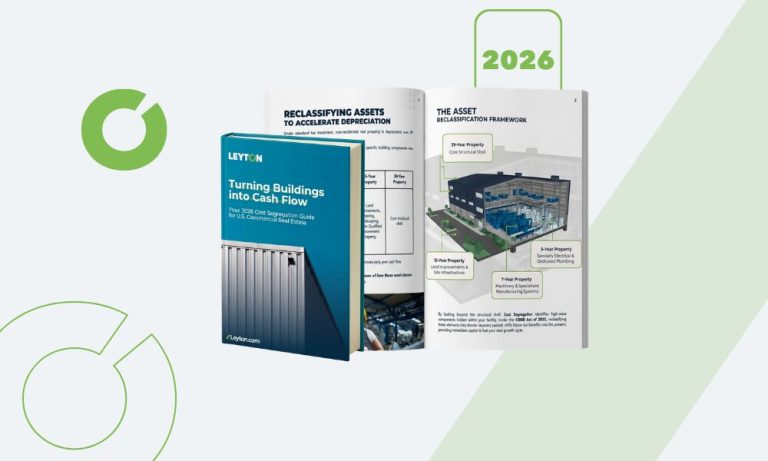
Cost Segregation is a tax strategy used by real estate owners to decrease income tax liability by reclassifying certain assets from real property to personal property and accelerating depreciation deductions.

Any individual or business that owns commercial or residential real estate can benefit from cost segregation studies, especially those with properties valued at $1,000,000 or more.

How cost segregation benefits property owners:
Cost segregation allows property owners to reduce their taxable income by accelerating depreciation deductions, leading to significant tax savings.

Who can benefit from Cost Segregation Studies?

Can I do my own Cost Segregation Study?

How is a Cost Segregation Study conducted?

A qualified professional, typically an engineer or accountant, analyzes the construction or acquisition costs of a property to identify assets that can be reclassified for accelerated depreciation.

Proceed with Caution

While it’s technically possible to conduct a cost segregation study on your own, it’s not recommended unless you have expertise in engineering, construction, and tax law.

IRS Guidance

The IRS advises taxpayers to hire unbiased 3rd party qualified professionals with experience in cost segregation to ensure accuracy and compliance with IRS regulations.

How it goes

Cost Segregation Example

Imagine a commercial property, such as an office building, is purchased for $2 million. Typically, for tax purposes, the entire property would be depreciated over 39 years using the straight-line method. This means an annual depreciation expense of around $51,282 ($2,000,000 / 39).

Through a cost segregation study, certain building components, such as carpeting and lighting, are reclassified as personal property or land improvements with shorter depreciation lives. After the study, $500,000 of assets are assigned a 5-year depreciation life.


Now, instead of depreciating the entire $2 million over 39 years, you can depreciate $1.5 million (original building cost minus the reclassified assets) over 39 years and $500,000 over 5 years.

This reclassification results in a significant increase in depreciation deductions in the early years of ownership. Instead of the original $51,282 annual depreciation, you might now have around $128,205 of annual depreciation ($1,500,000 / 39 + $500,000 / 5), leading to substantial tax savings in the earlier years of ownership.

Thought Leadership

Go further

Ready for the next step?

Book a Free Assessment

Ready to accelerate your transformation? Schedule a 30-minute scoping session with one
of our specialized partners to discuss your current challenges.

Answered by experts

Frequently Asked Questions

Everything you need to know before working with us.

Is Cost Segregation a one-time benefit?

No, the benefits of cost segregation can be realized upfront and over the life of the property through increased cash flow and reduced tax liabilities. It can also be done on the acquisition of a property and any major renovations.

The cost of a Cost Segregation Study depends on factors such as the size of the property and the complexity of the analysis but is often outweighed by the tax savings generated.

Documentation such as construction drawings, invoices, and purchase contracts is required to support the cost segregation analysis.

Yes, cost segregation studies can be conducted on single-family rental homes to identify and accelerate depreciation deductions for eligible components such as landscaping, appliances, and interior finishes.

Yes, cost segregation studies can be performed on both newly constructed properties and existing buildings, regardless of age.

Yes, you can use cost segregation on residential rental properties. Any type of commercial or residential real estate, including office buildings, warehouses, retail stores, apartment complexes, and even leasehold improvements, can benefit from cost segregation.

There are multiple options to calculate basis of land owned wit hverying degrees of support by case law and precedent. It’s critical to engage with a qualified cost segregation professional to determine an appropriate basis value.

Building improvements may fall into a number of depreciable lives depending on factors including case law and tax codes and regulations. In order to accurately allocate building improvements to appropriate class lives consult with a tax professional or accountant familiar with IRS regulations to ensure accurate depreciation of building improvements based on your specific circumstances.

Qualified Improvement Property replaced several categories of improvements detailed in tax regulations prior to the Tax Cuts and Jobs Act taking effect, including Leasehold Improvements. QIP typically depreciates over 15 years.It’s advisable to consult with a tax professional or accountant familiar with IRS regulations to ensure accurate depreciation of leasehold improvements based on your specific circumstances.